Throwback Thursday

Look for happiness under your own roof.
I’m a happy girl: sunny not saccharine. And despite not having the wind in my hair for years now because of life’s tough stuff, my laughter is still genuine and hardy. From the belly. Put me in the same space as Rachel and I’m like a room without a roof.  (Just ask Pharrell.)

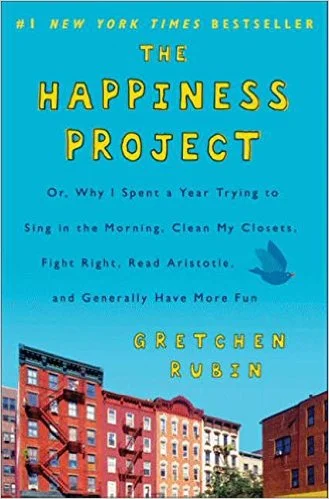
So if you’re eternally happy despite not having a spotless mind, do you read a book about happiness?  Absolutely. I can’t remember if I gave Rachel The Happiness Project or if she gave it to me?  (That happens a lot.) At any rate, it’s a winner.  Happiness guru, Gretchen Rubin, reminds us that practice makes pretty perfect, especially when applied to contentment. The project reflects her yearlong study of tracking monthly goals to magnify her happiness quotient.  

This book is packed with fascinating facts about the science of happiness.  It’s practical stuff, not preachy. (Thank Heaven or Gretchen: you choose.) One month (chapter), you’ll learn to be more serious about play, another month focuses on lightening up.  Is it earth-shattering info?  No. But that’s the point. Happiness is not a Mount Everest climb. Recently, The Huffington Post shared a piece about signs of happiness and how to stay that way.  It jives with Rubin’s advice. Symptoms of cheerfulness are pretty static: don’t sweat the small stuff, make new friends, live in the moment, and appreciate the little things—among others.  But Rubin gives us great reminders and rich examples that can re-focus our efforts to follow our bliss.  You know, serenity now stuff.

Posted by Tracy
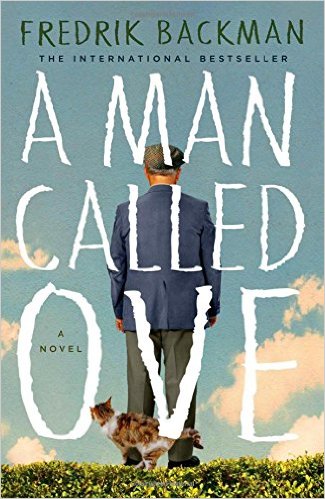
I Love Me a Curmudgeon

You only need one ray of light to chase all the shadows away.

I triple dog dare you not to fall in love with Ove (pronounced oo-va). And if by chance you don't, please refrain from telling me: you'll break my besotted heart. Ove is a self-described "archetypal grumpy old sod" who's as good at backing up U-Hauls and yelling at neighbors as he is bad at dying. It's a story about how everyone needs to be needed, how friendships can end over the purchase of a BMW, and how beneath one man's crusty exterior lies a heart that is too big.

If you're a fan of listening to books, A Man Called Ove is a great listen. There's just something about having Ove's voice grumbling in your head. Be forewarned: this book will induce bend-over laughter and tears at random so you may look a little silly if you're listening while out in public. I should also warn you that you'll end up investing in the actual book as well so you can mark page after page of favorite passages and read it over and over again. When you've finished (oh how I dread that word when it comes to a great book), and are in need of consolation, read an interview with the author here. He's a bit curmudgeonly himself and I swear I almost like him as much as Ove.

* (January 12, 2016) In talking to a few of my friends about this book, I'm realizing Ove may need to come with a warning label. While I loved this curmudgeon from the get-go, for some he appears to be more of an acquired taste. But fall in love they did, so stick with this one if at first you aren't as besotted as I am.

Posted by Rachel


This Book Deserves A Standing O

Everyone deserves a standing ovation because we all overcometh the world.

A close friend of mine once admitted that she’d rather lose a friend than a book—at first, I thought that was genuine hyperbole. Then I realized she was stone cold serious. Wow. What a stunning statement. I love books like I love Mexican food and clean sheets and a stout fire during a winter storm, not to mention the sound of my kids’ honest laughter or a sincere embrace, but I wouldn’t sacrifice most relationships for pages—even with Jane Austen’s words on them. (Jane v. Rachel wins in a knock out, Round 1.)

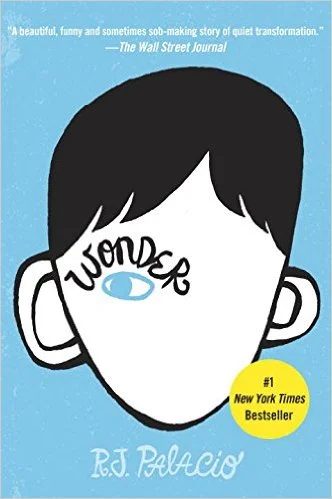
Then again, we do find friends in books, don’t we? I feel close to Scout Finch (and, of course, her dad Atticus), Jean Valjean, Anne Elliot, Cassandra Mortmain, the Birches, Minny, Mariam, and more recently, Auggie Pullman. True, I have a boy named Luke with special needs, so I’m especially drawn to endearing 10-year-old Auggie, but I have zero doubt you will be too.  

R.J. Palacio’s young adult book Wonder introduces us to Auggie Pullman who is blighted by a rare medical facial deformity. His abnormalities are so bad that 27 surgeries can’t erase it. His face provokes kids to ask if he was in a fire or if he is a zombie—or to just scream and run away. Auggie’s non-description of his face is no less harrowing, albeit vague: “I won’t describe what I look like. Whatever you’re thinking, it’s probably worse.”

When Auggie’s brilliant and remarkably supportive parents suggest that he participate in the 5th grade rather than continue homeschooling, he’s terrified. Horrified. But Ramona has nothing on Auggie Pullman the Brave, who forges ahead at Beecher Prep Middle School. His fears weren’t ill-founded. Kids are downright cruel to him at times. Auggie’s resilience is copious—it’s inspiring. While he has to carve his own path, one riddled with unique difficulties, he’s fortunate to experience a tangible closeness with his family that is ultimately a transformative force for good. He also finds out you can get through middle school without hurting anyone’s feelings, that’s really cool beans!

This is the sort of enchanting book that isn’t action-packed per se, but it’s soulful. As you follow Auggie through the halls of Beecher Prep and experience his highs and lows, you’ll catch yourself feeling deeply for him. (I cried more than once and young adult books seldom, if ever, make me weep.) In fact, you’ll begin to wonder if kindness isn’t the most important practice of all—not because of schmaltzy prose or crazy sentimentality, but because of a prolific boy who possesses more courage and kindness behind his ill-placed eyes than most others. “Maybe the universe does take care of its most fragile creations in ways we can’t see.”

P.S. i read Wonder to Luke and naturally he loved Auggie too.

Posted by Tracy

* Because we're huge fans of kids and great books, we'll bring the two together every week on Kid Lit Tuesdays. If you find one you love, share it with your child's teacher. Rachel gave Wonder to her son's 7th grade reading teacher and she based the entire 7th grade curriculum around it the following year. We can't think of a better lesson for middle schoolers to be learning than kindness.

Ain't Nothin' Like the Real Thing, Baby

Tracy is a purist. When it comes to fizzy beverages, it’s Coke: straight up, fully sugared, with the right amount of ice–preferably pebbled–or NOTHING. I’m a bit more flexible. Sure, all things considered and in the perfect circumstances, I prefer a Coke Zero with pebbled ice, but if the situation calls for it, I’ll happily substitute a Diet Coke, less happily a Diet Dr. Pepper, and rather begrudgingly, a Diet Pepsi—especially if I can mix in some regular Pepsi. I mean I love my Coke Zero, like addiction-level love, but desperate times call for desperate measures. Popcorn and Duds demand fizz, and if Diet Pepsi is the only offering, it’s a sacrifice I’m willing to make. Not Tracy. I’ve personally witnessed her swallow down her popcorn and Jujyfruits with...gasp…water. I can’t even imagine.

So it comes as no surprise that Tray turns her nose up at audiobooks. In her mind, audiobooks are a woeful imitation, the ugly stepsister masquerading as the lovely Cinderella. While she’s never actually tried one, she pitches her tent squarely in the camp of Joe Queenan, author of One for the Books, who declared: “I do not listen to audiobooks for the same reason I do not listen to baked ziti: it lacks the personal touch.”

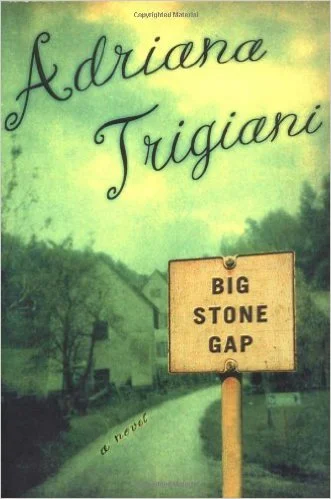
Hold on there, Joe, I beg to differ. I’ll admit my tent was once smack dab in the middle of your camp, right next to my “no e-readers for me” tent (that one’s still standing, but that is another story for another day). Once I actually tried listening to a book, I found it to be quite the opposite: listening to books often adds a personal touch. Especially if it's Adriana Trigiani bringing Ave Maria to life in Big Stone Gap or the voices of Minny and Aibileen in The Help. William Kent Krueger, author of Ordinary Grace, reminds us that "stories come out of the oral tradition." The art of storytelling has been around far longer than books on the page. For me, there are some books where listening heightens the experience: The Help, The Invention of Wings, All the Light We Cannot See, and pretty much any book by Ivan Doig, to name a few. Now that's not to say I don't go out and buy the actual book as well. I do that way more than I'll ever admit to if my husband is doing the asking. Books like All the Light We Cannot See, Rules of Civility, and The Bartender's Tale have sentences so divine they demand to be savored. So I buy them, reread them, and mark passages to return to again and again. And admittedly, there are books that something is lost when you listen to them, like The Book Thief.

All this to say that while I know I'll never win Tracy over, if you love a good listen, I'll let you know when I've listened to a book and whether or not I recommend it (just check the listening section on our bookshelf). So happy listening or reading...or both!

Posted by Rachel

Throwback Thursday

I am haunted by humans.

Throwin’ it back a decade today.  Ten years older, and I’m still celebrating Markus Zusak’s The Book Thief. Some books simply have staying power. Some books draw me in and never let me completely leave.  One of my mom’s favorite writers, Pat Conroy, professed this wisdom in his book My Reading Life:

Here's what I love: when a great writer turns me into a Jew from Chicago, a lesbian out of South Carolina, or a black woman moving into a subway entrance in Harlem. Turn me into something else, writers of the world. Make me Muslim, heretic, hermaphrodite. Put me into a crusader's armor, a cardinal's vestments. Let me feel the pygmy's heartbeat, the queen's breast, the torturer's pleasure, the Nile's taste, or the nomad's thirst. Tell me everything that I must know. Hold nothing back.

Zusak turned me into an embattled, gutsy German schoolgirl named Liesel Meminger.  
Liesel lives in Germany with her foster family during World War II, still reeling from her brother’s death and her mother’s willful disappearance. Her new papa, Hans Hubermann, (an instant beloved literary father figure for Rae and me, so naturally, you’re bound to love him) comforts her by teaching her to read.  Words soothe her.  

Death is the narrator of the novel, which is a new one.  Zusak needed a storyteller who could share Liesel’s dauntless point of view, but he also needed someone to supply snapshots of the war outside of Himmel Street to offer sobering and inspiring insights into the human condition.  We can see the horror and the sublime of human choice.  I was also reminded that many Germans became bonafide victims of war.  

Of course there’s resilience in precocious Liesel that inspires palpable hope in me, it will you too—the kind of hope Anne Frank gave us.  The Book Thief is a hauntingly beautiful novel that deserves to be read more than once over the years.

When you’ve finished this captivating read, check out the movie.  It will move you too.  Here’s a sneak peek:


Posted by Tracy

You're Suffering From Weltschmerz, Darling

In my old age, I see that life itself is often more fantastic and terrible than the stories we believed as children, and that perhaps there is no harm in finding magic among the trees.

I find there are few sorrows that cannot be quelled by a blanket of freshly fallen snow. When longing for my dad, who passed away several years ago, threatens to overwhelm me, I go to my favorite moment with him: I'm home from college on winter break, it's midnight and I've just come in from visiting friends. It's snowing, the kind of snow that makes the world quiet and lights up the night sky, and my dad gets that twinkle in his eyes and says "let's go build a snowman." And we do just that. Right there at midnight. That midnight snowman has chased many a blue day away.

Before I was married, I would fantasize about having kids and how I'd let them all stay home the first day it snowed each year and we'd drink hot cocoa and play in the snow all day. So where did I end up putting down roots to raise a family? The desert. As my sister-in-law said to me the other day, "One of the tragedies of your life is that you have to live in Nevada." While Southern Nevada is a lovely place with even lovelier people, it is sadly lacking in seasons. And snow? Pretty much nonexistent. Sigh. I try to pretend I live somewhere else. I light fires in my fireplace when I don't need them, I turn down the AC in September and October and burn pumpkin candles to trick myself into thinking it's fall outside. Every once in a while though, reality rears its ugly head and I can get rather melancholy. I learned a new word the other day that describes my condition perfectly. I'd like to say I found it while reading, but it came from one of my other reliable sources: Sheldon Cooper.

Weltschmerz! The depression that arises from comparing the world as it is to a hypothetical idealized world. So now I know what I'm feeling when, after three whole weeks of spring in which my English roses are in their glory, I wake up to summer with its blistering heat and wilting flowers, and I'm hit smack in the face by the fact that I don't actually live in an English cottage. Weltschmerz!

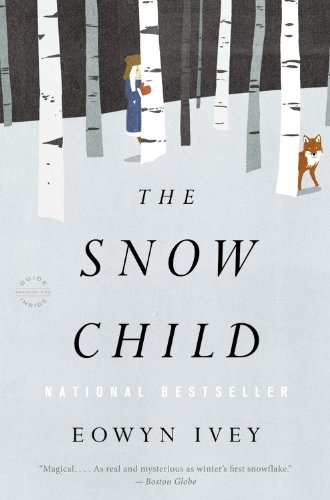
So you're probably wondering by now, and who could blame you, what any of this has to do with Eowyn Ivey's The Snow Child. I can't always explain the meanderings of my tired brain, but I will try to do so here. No, it isn't about a child who grows up in the snow and then has to move to the desert and have all her winter dreams crushed. But I would say Mabel, a childless woman on the verge of being defeated by life, suffers from severe weltschmerz, or world-weariness, as it is officially described, and that leads her to convince her husband, Jack, to leave his family farm behind in Pennsylvania to homestead in 1920's Alaska. More than that, though, is that in this tale, the snow stirs magic, blankets sadness, and heals wounds. Like my midnight snowman. 

The writing is exquisite. There are sentences that will stop you dead in your tracks and fill you with awe. Like this one: "Not many thirteen-year-old boys could win a wrestling match with envy." I'm brimming with envy over that sentence. And this:

She told no one of the otter. Garret would want to trap it, Faina would ask her to draw it. She refused to confine it by any means because, in some strange way, she knew it was her heart. Living, twisting muscle beneath bristly damp fur. Breaking through thin ice, splashing in cold creek water, sliding belly-down across snow. Joyful, though it should have known better.

When you finish reading it, to ease the melancholy that inevitably comes when reaching the end of a great book, read the interview with the author in the back. She lives in Alaska (dreamy), works in a bookstore (also dreamy), and she's utterly delightful. She's officially on my list of people I'm best friends with in my mind.

This has been a LONG post, but I must end with Robert Goolrick's review because upon reading it I immediately knew I could not come close to summing up this book so brilliantly:

If Willa Cather and Gabriel Garcia Márquez had collaborated on a book, The Snow Child would be it. It is a remarkable accomplishment—a combination of the most delicate, ethereal, fairy-tale magic and the harsh realities of homesteading in the Alaskan wilderness. Stunningly conceived, beautifully told, this story has the intricate fragility of a snowflake and the natural honesty of the dirt beneath your feet, the unnerving reality of a dream in the night. It fascinates, it touches the heart. It gallops along even as it takes time to pause at the wonder of life and the world in which we live. And it will stir you up and stay with you for a long, long time.

Posted by Rachel

Oy With The Poodles Already

So 15 years ago today, this happened:

How I love my Gilmore Girls. What's not to love, really? Stars Hollow. I'd move there tomorrow if I could, and if it really existed. Mere formality. Quirky characters, witty banter, captivating story lines: all the makings of a great book wrapped up in a television show. Good writing, whatever the platform, should be celebrated.

My son Ben, who was twelve at the time, and I were on our way to an event a few years ago when I realized I'd left our tickets at home. I jokingly blamed him for not doing his job and reminding me to grab them. He replied, without skipping a beat, "So you're saying I'm your Rory?." I knew then and there I was raising a fine young man.

Posted by Rachel

You Bring The Popcorn And I'll Bring The Duds

Or maybe when she realized that he was never going to come and rescue her, she did what all strong women do. She found a way to save herself.

There's a small-town southern girl inside of me, itching to get out. She lives right next to the British girl who longs to call London home and the girl who's pretty sure she could live out her days in a small cabin in the woods. I'm a mixed bag of characters. As is Ave Maria Mulligan. Maybe that's why I took an immediate liking to her.

When we first meet Ave, she is the self-proclaimed town spinster, although only in her mid-thirties, whose favorite days are when the bookmobile rolls into town. Things soon take a turn for the less predictable, and we, along with the other inhabitants of Big Stone Gap, get to come along for the ride. I settled right into small town living and found myself befriending a whole cast of quirky and endearing characters: Fleeta, Iva Lou, and Pearl, to name a few. Tell me those names don't make you want to spend some time in Big Stone Gap as well.

I was first introduced to Adriana Trigiani's work when a dear friend gave me The Shoemaker's Wife and I became an instant fan. As Kathryn Stockett, author of The Help, wrote, "I don't know how Adriana goes into her family's attic and emerges with these amazing stories, I'm just happy she does. If you're meeting her work for the first time, get ready for a lifelong love affair." And a love affair it has been. Stories rich in history and strong female characters, in settings as diverse as rural American towns, Italian villages, and early-century New York City, I've yet to find one I didn't love. I hate playing favorites, but if pushed, I'd say that along with Big Stone Gap and The Shoemaker's Wife, I'd especially recommend Lucia, Lucia, Big Cherry Holler, and Milk Glass Moon.

The last two mentioned above are sequels to Big Stone Gap. She wrote a fourth in that series, Home to Big Stone Gap, that I didn't love quite as much. It could have something to do with the fact that I listened to the series, and all but the last were narrated by Trigiani herself. I fell in love with the way she brought Ave to life and couldn't get used to a new voice; it seemed to lose some of its charm. I probably should have read that one instead of listened.

Now for the news that is bound to bring a smile to every Ave Maria Mulligan fan and future fan out there: Big Stone Gap, the movie, is being released this Friday. It's written and directed by Adriana Trigiani herself, which makes it over-the-top good news. Here's the trailer:

Posted by Rachel