It Doesn't Matter Where You Live, It's How You Live

Literature has been called a handbook for the art of being human.
therentcollector.jpg

I know what you're thinking...do I really want to read a book about people living on a trash heap in Cambodia?? You do. I'll admit that when Tracy sent me The Rent Collector, my first thought was it would be one I'd have to gear up for before reading. It just looked depressing. And the nice little review on the cover touting it as a story about the perseverance of the human spirit did nothing to assuage my fears. More often than not, that is code for "it will take perseverance to finish this novel."

Now I'm not one to shy away from a good depressing read, but I do have to be in the mood. (Which begs the question: what kind of mood does one need to be in before beginning a depressing novel? Already in the depths and wanting to wallow there? Happy and feeling the need to curb that enthusiasm?) Tracy was no help in the matter as she hadn't read it yet...so I did something I don't usually do: I dove right in, throwing care to the wind, not reading a single review. I'm so glad I did. How glad? It's been the birthday gift of choice ever since—and you should know Tracy and I take book giving very seriously.

There are so many things I love about this book. Mostly, the characters. Ah...Sopeap. You had me at, "if every story ended with a handsome prince, there wouldn't be anybody left in the kingdom to stand around and cheer." And Lucky Fat, who more often than not, displays "more animation than any human being living in a dump should." My love only waxes stronger as the narrative illustrates literacy's ability to change lives, champions the need to read fiction because we each find our own stories in the pages of made-up stories (cue my standing ovation), and perhaps most of all, the author's tremendous restraint in resisting the urge to make everything better by changing the characters' circumstances. Then comes a beautiful section where we witness the magical lure of stories read aloud and I'm sold: hook, line, and sinker.

Enough from me. I'll end with one of the many passages I have marked, although it pains me to only include one:

Literature is a cake with many toys baked inside—and even if you find them all, if you don't enjoy the path that leads you to them, it will be a hollow accomplishment. There was a playwright named Heller, American, I believe, who summed it up this way. He said, "They knew everything about literature except how to enjoy it."

Heller just summed up many of the overachievers in my college English Lit classes.

Posted by Rachel

Throwback Thursday

A Tree Grows in Brooklyn is not the sort of book that can be reduced to its plot line. The best anyone can say is that it is a story about what it means to be human. —Anna Quindlen

Each week we'll throw back to one of our favorite classics...or books that are classics to us. We're kicking off our first Throwback Thursday with a longtime favorite: A Tree Grows in Brooklyn. If you've never read it, we highly recommend you remedy that pronto. Go ahead, we'll wait as you dash to your nearest library or bookstore. Tracy has even agreed to look the other way while you download it to your phone in order to listen to it. That is how much we want you to read this book. You'll be better for having known Francie Nolan. Here's a favorite passage:

From that time on, the world was hers for the reading. She would never be lonely again, never miss the lack of intimate friends. Books became her friends and there was one for every mood. There was poetry for quiet companionship. There was adventure when she tired of quiet hours. There would be love stories when she came into adolescence and when she wanted to feel a closeness to someone she could read a biography. On that day when she first knew she could read, she made a vow to read one book a day as long as she lived.

For those of you that have already spent time with Francie, looking out her third-story window at the tree that grew in cement, the tree "that liked poor people," here are a few enticements to encourage your return:

Did you know the book is autobiographical? It was originally written as a memoir but an editor encouraged Smith to re-configure it as fiction. So that English teacher who gave Francie "C"s for daring to write, as Anna Quindlen put it, stories about "real-life horror instead of gerrymandered tales of apple orchards and high tea," got her comeuppance when Betty's story became a bestseller. Who doesn't love a little poetic justice?

If you don't already have the edition with a forward by Anna Quindlen (another person we are best friends with in our minds), it is well-worth your money. You can find it here.

During WWll, librarians who were angered by Hitler's banning and burning of millions of books, launched a campaign to send books to American troops overseas. They issued a rally call for donations and over 20 million hard cover books were donated from across the country. Soon, the War Department and the publishing industry became involved and printed what would become known as Armed Services Editions (ASEs) of well-loved novels. These editions were small, lightweight paperbacks that the soldiers could carry in their pockets. You can read more about this in Molly Guptill Manning's When Books Went to War: The Stories that Helped Us Win WWll. A Tree Grows in Brooklyn quickly became one of, if not the most, popular of all ASEs, turning Betty Smith into a national icon. Manning writes:

Smith once estimated that she received approximately four letters a day from servicemen, or about fifteen hundred a year. She responded to almost all of them...Smith and the council were so inundated with letters about A Tree Grows in Brooklyn that the council decided to reprint the book. "I think it's wonderful that the armed services edition is going into a second edition," Smith told a friend. "Most of my mail is from servicemen overseas and without exception, they say that everything in [A Tree Grows in Brooklyn] seems so true that it's not like reading a book—it's like being home in Brooklyn again." "Some letters bring tears to my eyes," she admitted. "I am very much touched by the service men away from home thinking so much of the book. I feel that I have done some good in this world."

Smith did indelible good when she published her essay, "Who Died?" personalizing the deaths of the soldiers lost on the beaches at Normandy:

I've just been told that over 3,000 of our American boys died in the first eleven days of the invasion of France.

Who died? I'll tell you who died.

Not so many years ago, there was a little boy sleeping in his crib. In the night, it thundered and lightninged. He woke and cried out in fear. His mother came and fixed his blankets better and said, "Don't cry. Nothing will ever hurt you."

He died...

There was another kid with a new bicycle. When he came past your house he rode no-hands while he folded the evening paper in a block and threw it against your door. You used to jump when you heard the bang. You said, "Some day, I'm going to give that kid a good talking-to." He died.

Then there were two kids. One said to the other, "I'll do all the talking. I just want you to come along to give me nerve." They came to your door. The one who had promised to do all the talking said, "Would you like your lawn mowed, Mister?"

They died together. They gave each other nerve...

They all died.

And I don't know how any one of us here at home can sleep peacefully tonight unless we are sure in our hearts that we have done our part all the way along the line.

Posted by Rachel

You Have One Day To Read Me Before You

A hilarious, heartbreaking, riveting novel...I will stake my reputation on this book. —Anne Lamott on Me Before You

First of all, can we just reflect for a moment on what it would feel like to have an author like Anne Lamott write that about your novel? I can't even imagine. If you aren't familiar with Lamott, stick around. We'll introduce you soon and you'll be fast friends. For now, take our word for it, any novel she's willing to stake her reputation on is a safe bet, indeed.

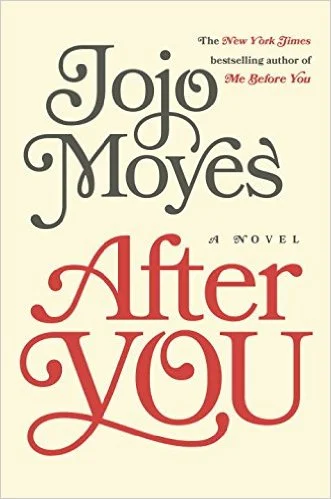
Jojo Moyes's Me Before You is one of those books you won't want to put down. You'll laugh and you'll sob. Yes, sob. I'm talking ugly crying here. And like any novel worth the salt of your tears, it will stay with you long after you finish.

That being said, it is chick lit. So if you have an aversion to that sort of thing, chances are you won't be a fan. This one isn't going to win the Pulitzer. It is, however, what I like to call a beach read with a brain: breezy and comical at times, yet able to tackle difficult subjects without being predictable. Think of it as the Gilmore Girls genre of fiction. So if you're like me, and aren't above some good ol' escapism, dig in. This one is a winner.

Why only one day to read it, you ask? Because tomorrow the sequel, After You, is being released. I've cleared my schedule.

Posted by Rachel

We Missed National Puctuation Day!!!!!!!!!

In the family of punctuation, where the full stop is daddy and the comma is mummy, and the semicolon quietly practices the piano with crossed hands, the exclamation mark is the big attention-deficit brother who gets overexcited and breaks things and laughs too loudly.

Yesterday was National Punctuation Day. As you can see by my use of nine exclamation points, missing it has caused me some serious distress. Had I used a mere six or seven, you may have thought that while I was sad to have missed it, I wasn't inconsolable.

When did we go from hesitating to use an exclamation point, reserving it for only the most deserving of sentences, to thinking the use of only one is halfhearted at best? When did the period at the end of a sentence start denoting irritation or, at the very least, indifference? Nothing sends my daughter into a tailspin quicker than when I answer a text with a "Sure." That period wields more force than a slamming door. She immediately responds with, "What's wrong???" Or "Are you mad at me???" Yes, apparently question marks now travel in groups as well. 

Now before my friends and family start fretting over how many exclamation points they used in their last text to me, I must say I'm often guilty of all of the above: the over-exclamation pointing, the fear of a favor being answered with a period, and the redundant question marks. I worry the use of only one exclamation point will send the message that while I'm excited, I'm not that excited.

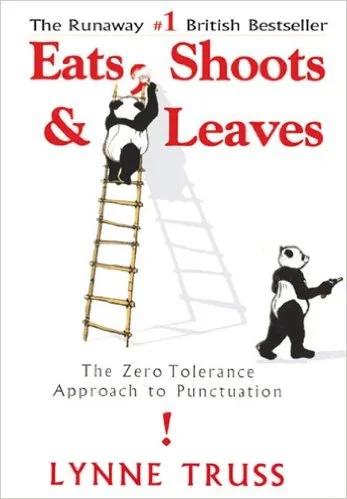
Clearly, I'm not what Lynne Truss would call "a true stickler." I do, however, love her book, Eats, Shoots & Leaves, and highly recommend it for the stickler and slacker alike. You'll laugh while you learn, which makes for literary magic. It's been around a while, but a book that gives punctuation some personality deserves a shout-out today, or rather, yesterday. For the littles in your life, check out her children's book: Eats, Shoots & Leaves: Why, Commas Really Do Make A Difference!

Posted by Rachel

Baby Gifts 101

There are many little ways to enlarge your child’s world. Love of books is the best of all. —Jacqueline Kennedy

Hear, hear! We at Two at Twenty-Seven are all for starting them young. So the next time you need to buy a baby gift, think big. Give a gift that won't just make them look darling, they're already experts at that, give them a gift that enlarges their world: a book. Or two. Or even better, three. We've rounded up some of our latest favorites here:

wonderful4.jpg

This charming book has it all: beautiful, classic illustrations in rich colors and a wonderful story line. A book that encourages children to chase their dreams knowing that their parents will always be their biggest fans. The Wonderful Things You Will Be is a book every child will love for years to come. We're also smitten with Emily Winfield Martin's other children's books: Dream Animals: A Bedtime Journey and Daydreamers: A Journey of Imagination.

Darling illustrations and die-cuts throughout, this fun read will inspire little ones to become Brave as Can Be.

Fans of Olivia will love her newest escapade as she finds herself smack dab in the middle of an identity crisis. Never one to conform, Olivia scoffs at the idea that all girls want to be fairy princesses—she's set her sights far higher. Olivia and the Fairy Princesses might just be our favorite Olivia sequel yet.

chugga2.jpg

Chugga Chugga Choo Choo is an oldie, but we fear it may not be as well-known as other classics so we're throwing it in here. The simple, rhyming text chugs along as a little boy's train set and toys come to life. It will leave little ones cheering, "Again! Again!"

Set a Watchman To Keep You From Reading This Book

"...before I can live with other folks I've got to live with myself. The one thing that doesn’t abide by majority rule is a person’s conscience. " - the Atticus Finch of To Kill A Mockingbird

Don't mess with my beloved literary father figures. It's hard enough in real life to grow up and realize your own father is human...even if he is the beautiful human kind that my dad was. It still robs you of your innocence—your notion that every little thing can be conquered as long your dad is beside you. To realize that this stronger than all, fearful of nothing man indeed has fears, heartaches, and sorrow can be unnerving. You adapt. You find your footing and learn to love the man he truly is, perhaps as in my case, even more than you did before. But a little part of you still yearns for that larger than life version you once knew if only for the safety net it provided. Thankfully, you think, I still have Atticus Finch and Mr. March. But no, apparently you don't. Forgive me if I sound melodramatic, I take these things quite personally. I still haven't forgiven Geraldine Brooks for "humanizing" Jo's dad in March, and I won't soon forgive the lawyers responsible for releasing this book either. If you loved the Atticus Finch of Scout's youth, do yourself a favor and leave this book on the shelf. If for no other reason, do it for Harper Lee who never wanted this book published.

The one good thing I will say about having read this book is it deepened my appreciation for the power of a great editor. For editor Tay Hohoff to have found within Go Set a Watchman, which was Lee's first submission, the potential for what would go on to become To Kill a Mockingbird, pays homage to gifted editors everywhere. In an article for The New York Times entitled The Invisible Hand Behind Harper Lee's To Kill A Mockingbird, Jonathan Mahler writes:

...this week’s publication of “Go Set a Watchman” offers a rare glimpse at the before and after of a book widely regarded as a masterpiece. The main characters may be the same, but “Watchman” is an entirely different book in both shape and tone from “Mockingbird.” Scout is not an impressionable child in Maycomb, Ala., looking up to her heroic father, but a young woman from Maycomb living in New York. Her father, the great Atticus Finch, is a bigot.

The release of “Watchman,” which has been only lightly copy-edited, also leads inevitably to the question: Who was the invisible hand guiding Ms. Lee as she transformed this book into “Mockingbird”? Maybe more to the point, how big a role did she play in reconceiving the story from a dark tale of a young woman’s disillusionment with her father’s racist views, to a redemptive one of moral courage and human decency?

Both the editor and the writer in me wants to go back in time and hug Tay Hohoff for helping Lee bring to life the Atticus we all love, and the one we needed at the time of the book's release, and perhaps even more so, now.

#HomeToHogwarts

No story lives unless someone wants to listen....The stories we love best do live in us forever. So whether you come back by page or by the big screen, Hogwarts will always be there to welcome you home. - J.K. Rowling

For those of you as lonesome for Hogwarts as we are, do yourself a favor and follow @jk_rowling on Twitter. While it isn't the same as being lost in the pages of Harry Potter, it's the next best thing. Here are two gems from today:

"I'm in Edinburgh, so could somebody at King's Cross wish James S Potter good luck for me? He's starting at Hogwarts today."

"Have just heard that James S Potter has been Sorted (to nobody's surprise) into Gryffindor. Teddy Lupin (Head Boy, Hufflepuff) disappointed."