OUR HOLIDAY GIFT GUIDE IS HERE!
Better late than never? 7 shopping days left and we’ve got the perfect book for everyone on your list!

Your Custom Text Here
Better late than never? 7 shopping days left and we’ve got the perfect book for everyone on your list!

Five years ago, near the beginning of our blogging adventure, Rachel wrote about needing a silent night during December’s self-imposed mayhem and madness. I’ve felt that way all month. And the ten-day forecast doesn’t look any sunnier I’m afraid. I guess it’s true, even Santa Claus gets the blues. Or simply gets overwhelmed and unorganized—and needs someone else to come up with a holiday gift guide. You understand, don’t you?
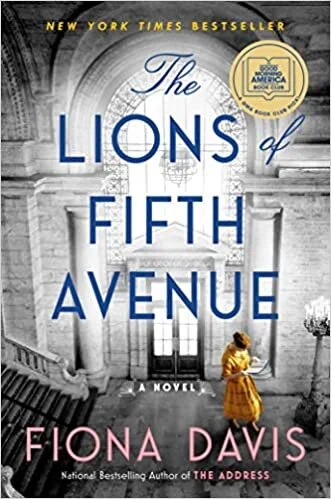
While I’m feeling vulnerable, let me also say that I’m sorry it’s taken me this long to write about The Lions of Fifth Avenue by Fiona Davis. I read it a while before the holiday jam-up, before Good Morning America picked it for their reading group. (Honestly, I hate it when that happens; I like to get a jump on the popular clubs!) It won’t surprise I liked Davis’s latest—I’m New York born, I love a little mystery, and when it’s set in a library??? C’mon! This could be a great little Christmas gift for the booklovers in your life. The Jane Austen Society should definitely be wrapped up in something sparkly and placed under your favorite lit lover’s tree. (I vow to blog about that modern wonder next week!)
Since time is puttin’ the squeeze on me, I’ll let Rae’s girl Adriana Trigiani (NYT bestselling author of The Shoemaker’s Wife) give us the skinny on the lions. Here she goes: “The magnificent Fiona Davis has written a page turner for book lovers everywhere! I was on the edge of my seat as Laura Lyons, the ambitious essayist, breaks down social barriers and finds herself adrift in her own life at the end of the Belle Epoque in 1913 New York City. Secrets are revealed eighty years later by her granddaughter, who found her way into the family business, working at the New York Public Library. This is a story of family ties, their lost dreams and the redemption that comes from discovering truth.” If you’re fortunate to find a few silent nights this Christmas season, The Lions of Fifth Avenue will make for good company.
“It is sad, of course, to forget. But it is a lonely thing, to be forgotten. To remember when no one else does.”
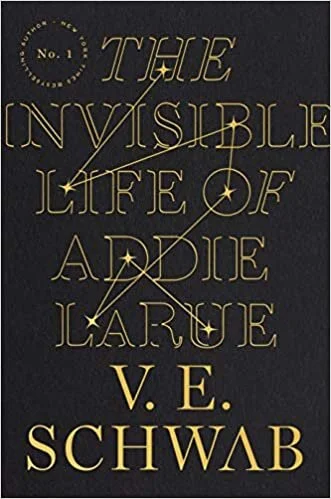
When I was in elementary school, recess consisted of playing on the Big Toy, with some light kiddie conversation sprinkled in. Superheroes and superpowers were hot topics. The most frequently debated question—“If you could have one super power, what would it be?” I was fixated on the idea of flying—you could go anywhere you wanted on your own terms! (Maybe I’m Toni Morrison’s long-lost cousin, a girl can dream, right?) Most of my friends wanted the power of invisibility. How freeing to be present in an instant but nobody knows it. After reading V.E. Schwab’s The Invisible Life of Addie LaRue, I am firmly convinced that invisibility is less of a superpower and more of a curse.
Picture this: it’s 1714 in a small village in France. You’re 23, past your prime, single and disapproved by everyone in your small town (minus “crazy” Esther). When a recently widowed man wants you to be his wife, your parents practically throw you at him to marry you off. Your wedding date is set despite protests. Minutes before the wedding, you run off into the woods to pray to anyone who will listen. The only “thing” that appears is Darkness, who agrees to take away her fate in exchange for her soul. Such is the plight of Addie LaRue – what should she do?
Addie takes the deal. Shortly after, she discovers no one can remember her – not even her beloved Papa, who casts her out of their home when she tries to return. Calling back the Darkness, she begs to have it reversed. The dim creature declines, mentioning to her that she was the one that prayed to him for relief. Left with no other options, Addie embarks on a nomadic life attempting to find her purpose.
For 300 years, Addie steals, swoons, and stalks her way into hundreds of friends and admirer’s lives, desperate to have one person remember her. No one remembers her long enough to sustain a relationship. She is a forgotten soul—that is until 2014, when she meets Henry Strauss. Strauss remembers her stealing a book from his bookstore the previous day. Shocked beyond all reason, Addie throws herself at Henry. She’s desperate for answers, until she discovers Henry’s dark secret.
This book is a solid 4.75/dare I say on the doorstep of 5 stars? From the moment I picked it up, I was hooked. The first half of this gripping fiction details the backstory of Addie’s experiences with history and travels; the second half focuses on her current-day situation with Henry Strauss. Beginning to end, Schawb keeps readers entranced with what will become of poor Addie LaRue. Don’t wait to pick this book up. I repeat, don’t wait to pick this book up!
If you’re so inclined, drop what superpower you’re after below…just do it after you finish the story. (Who knows, your answer may change :)
“Sometimes the debt you pay ain’t exactly the one you owe, but it works out jus’ the same anyway. Lord knows I done caused my share of heartache in this life.”

To quote my girl Rachel, “Sometimes Audible proves a skillful matchmaker—pairing me up with [a great] read based on books I’ve loved. One that I may never have stumbled across otherwise,” like The Pecan Man. If you’ve been following along with us for a while now, maybe you’ve noticed that Rae and I are big fans of Southern fiction. We’ve recommended southerly winners like Where the Crawdads Sing, All Over but the Shoutin’, The Giver of Stars, and Charms for the Easy Life, to name a few. And we have to weather the persistent urge to defend against altering quite possibly the most perfect character in modern-day literature, Atticus Finch. It’s hard to resist lit from “a place where grandmothers hold babies on their laps under the stars and whisper in their ears that the lights in the sky are holes in the floor of heaven.” (Thank you, Rick Bragg, for that little bit of starriness right there.)
The Pecan Man shot to the front of my tbr pile when I read that, “This [novella] has been described as To Kill a Mockingbird meets The Help.” Any time, I said, any time a book is mentioned in the same realm as Harper Lee’s phenom, I’m down to give it a try. The pee-can man, a homeless elderly black man named Eddie, did remind me a little of Boo Radley—mothers would call their children inside when he came into view. And Ora, a widow with a big heart and dispassionate eyes, who hires Eddie to help about the yard certainly has elements of Atticus Finch in her. You’ll have to read this little southern gem to discover whether or not Eddie was unjustly accused and sentenced for the death of the police chief’s son.
I’m grateful I met Ora. She’s both progressive and kind, and her moral compass is somewhere in the vicinity of true north. Let’s be honest, she didn’t start a movement. But in the summer of 1976, Ora demonstrated a deep understanding of this truth: Black Lives Matter.
P.S. Looks like Laurence Fishburne is set to play The Pecan Man onscreen…should be good!
“Oh, when I look back now
That summer seemed to last forever
And if I had the choice
Yeah, I'd always wanna be there
Those were the best days of my life” —Bryan Adams, “Summer of ‘69”
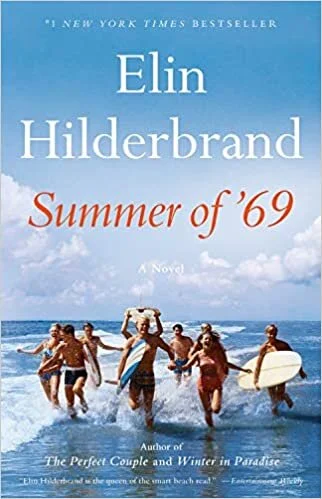
While working my favorite “hobby job” at the bookstore, a regular customer recommended Summer of ’69, a recent release from her favorite author Elin Hilderbrand. I figured since I was always giving suggestions, maybe I should try one suggested to me. Not only does the story take place on Nantucket Island (one of my favorite East Coast getaways), Bryan Adams crooned that it was the best year of his life…so what did I have to lose?
Hilderbrand weaves together multiple historical events together with tumultuous (yet entertaining) family drama. Jessie, the youngest in the family, usually looks forward to her summers on Nantucket with her siblings, despite having to deal with her elitist host of a grandmother. This year, she finds herself alone with her grandma trying to navigate the many life changes her family is facing. With her brother, Tiger, off fighting in Vietnam, her oldest sister, Blair, waiting to have the first grandchild in the family, and her other sister, Kirby, “finding herself” as a chambermaid on the “lesser” island (Martha’s Vineyard doesn’t seem to be a lesser choice to me, but I digress), Jessie is looking forward to her Nantucket summer almost as much as her up-and-coming tennis lessons Grandma’s forcing her to take.
Jessie’s summer is anything but ordinary. Hilderbrand does a magical job of meshing together the Levin sibling’s stories throughout a summer of crazy changes. A solid 3.5 out of 5 stars, this is a good book to take on your next beach vacay. (2021, be good to us, please!) While I wouldn’t run out and grab it from your nearest bookstore, it’s a quick and light read that’s perfect for a break from reality.
Posted by Sharee
Well-behaved women seldom make history. — Laurel Thatcher Ulrich

Laurel Thatcher Ulrich is right. Here at Two at Twenty-Seven, we live by the three F’s: faith, family and feminism. (Personally, I would argue for a fourth: food.) We’re all about that girl power! And A Well-Behaved Woman: A Novel of the Vanderbilts brings us all the good girl vibes about making the world a better place for us gals.
Additionally, historical fiction is all the rage these days, and we’re here for it. Who doesn’t love a good story that’s also based on true events? Plus, author Therese Ann Fowler does a phenomenal job weaving in the day-to-day “struggles” of the rich during this time period. Now, I don’t necessarily “Keep Up” with those Kardashians, but I’ll be the first to admit that I’m a sucker for lifestyles of the rich and the famous. And the Vanderbilt family brings the DRAMA. Think family shame from lavish lifestyles, crashing yachts, affairs and competitions to see who has the biggest and best mansions—spoiler alert: the Biltmore Estate wins—and you’ve scraped the surface of the Vanderbilts. What started as a monopoly on the U.S.’s railway lines turned into millions of family dollars through investments and business ventures. Underlying all of that drama, however, is a more poignant story: the remarkable life of a Vanderbilt in-law and eventually the evolution of one of the country’s first forward-thinking feminists.
Alva Smith is a soon-to-be wannabe in the world of the rich and needs to marry someone with status soon–not only for her family’s status, but for their livelihoods, after her father’s cotton business is nearly bankrupted by the outcome of the Civil War. When a prominent Cuban heiress (and Alva’s best friend) proposes a union between Alva and their second son of the recently shunned yet prominent Vanderbilt family, Alva would be foolish to deny the offer. She accepts. The marriage is arranged. And the world opens up for Alva and her three sisters in New York City.
Now, I know you’re reading this and thinking, “Why do I want to read the story of an insanely rich person? How does this relate to me?” I thought the same thing about 50 pages in. The truth is, Alva Smith Vanderbilt is anything BUT a “well-behaved” woman by the standards of the Gilded Age. She throws a costume party to get back at a socialite who denied her mother-in-law a box at the opera, she designs mansions and works hand-in-hand with a male architect to bring the buildings to life (gasp!), and more. My personal favorite would be Alva’s ability to see beyond the status of those traditionally rich families and create new trends. In order to get back at that pesky Mrs. Astor who (still) refused to give the Vanderbilts a box at the opera, she worked with a team to found The Met—for all to consume fine art. The world thanks you for your gumption, girl!
Beyond all of that excitement, I was deeply pensive about Alva’s story towards the end. She continually contemplates many of life’s deepest questions—the most frequent surround the subject of love. What is love? Is it marrying for comfort? Is it committing yourself to your partner no matter their profession or standing, even if it means putting you and your family in a lesser position? Is it even attainable in this life? Through all the twists and turns, Alva’s belief that love is out there to be found leads her to make one the grandest decisions in the fight towards gender equality in the Gilded Age. (Read it, you’ll understand.) I believe there are women everywhere that will forever be grateful for Alva Smith Vanderbilt and her ardent bravery.
It’s annoying I know, but I gotta make a not-so-shameless plug mid-review for Z: A Novel of Zelda Fitzgerald. Fowler first came on the scene in 2016 with the life story about Zelda Sayre Fitzgerald and her rollercoaster relationship with F. Scott. A striking read that invokes empathy and sympathy, Z sheds some light on mental health and the toll it takes on all family members, especially women. In my humble opinion, Z is a better story, but A Well-Behaved Woman is a better book. Pick it up if you want a throwback and a dose of drama from the roaring 20’s and 30’s. And now, back to our regularly scheduled programming.
Despite coming out in late 2018, this book has stood the test of time. A solid 4.5 out of 5 stars, A Well-Behaved Woman will have you cheering for Alva all the way. Who runs the world? GIRLS!
“Either you follow-up, or you fold-up.” – Bernard Kelvin Cline
TGIF, my friends. Although the days of 2020 seem to blend together, Fridays still tend to be extra sweet. It’s an extra special Friday to chat lit, as we’re moving into the cozy days of fall—hope you have a chance to nestle under a blanket with your favorite drink and current read this weekend!
We’ve shared posts about books that now have sequels, so of course, we had to read them. Be warned: it’s rare to find a sequel that’s better than the original, but the books below are worth your time. If you haven’t read the original books, we suggest putting a pin in this post until you’ve dived into the originals.
P.S. There are multiple spoilers in the review below!
“If I’m going to have regrets in this life, I’d rather them be for the chances I took and not the opportunities I let slip away.”
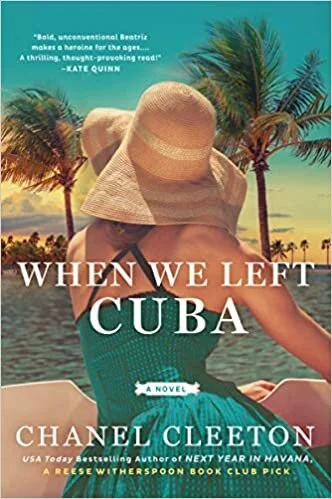
If this post rang true to you, get excited: Chanel Cleeton’s sequel When We Left Cuba tells the story of Beatriz, the life of the party in the Perez family. SPOILER ALERT: Following their exile from Cuba, Beatriz focuses her efforts to going back. Her goal: avenge her brother’s death and kill Fidel Castro, while working with the CIA. Adding a layer of complexity, Beatriz falls in love in with a powerful politician and begins a secret (and forbidden) relationship. Trying to balance her secret missions and passions proves difficult. Beatriz is left with no choice but to sacrifice one to gain the other.
This book deserves a solid 3.7 out of 5 stars. Most sequels have a hard time packing the same punch that originals do. You gotta give Cleeton credit though, it’s hard to come off a home run of a first release (just ask MC Hammer). While the story of Next Year in Havana is more captivating, you’ll be turning pages to find out what crazy thing Beatriz does next.
“When you get old, you become invisible. It’s just the truth. And yet it’s freeing in a way…You go through life and you think you are something. Not in a good way, and not in a bad way. But you think you are something, and then you see that you are no longer anything. To a waitress with a huge hind end you’ve become invisible. And it’s freeing.”
Glowing praise from Tracy for Olive Kitteridge motivated my mom and me to get to know the impossibly flawed Mainer. The prize winner one of the best-written books we’ve read all year, so the natural next step was to read her second story, Olive, Again. Elizabeth Strout picks up her story where she left off – we’re taken directly into the mind of Olive, as she provides the blunt reasoning produced by her later years. Not only is she attempting to mend the relationship with her son and daughter-in-law, she’s trying to navigate (and squander) her feelings for Jack Kennison. Thirteen additional stories from the townspeople of Crosby tie together 10 more years of Olive’s life. Jump into the story to join the pursuit of Olive’s quest to find what makes her “not unhappy.”
While the original book had better stories and more thought-provoking mind rants, Strout poses deep life questions that one ponders towards the end of their lives. The sequel deserves 4 out of 5 stars and a few hours of your time.
PS- if you’re into TV, HBO made the first book into a mini-series!
The only effect I ardently long to produce by my writings, is that those who read them should be better able to imagine and to feel the pains and the joys of those who differ from them in everything but the broad fact of being struggling, erring human creatures. —George Eliot
Last week was rough, dear reader. And that’s saying something in the midst of a very rough year. Is 2020 over yet? This year has been heavy on shouting and light on listening. Cue last night’s debate. Things are at a fever pitch and I’ve got the family email, laced in all-caps and chock-fulla venom, to prove it. While it made me ache for a gentle brother gone too soon and a father who wore his compassion in his eyes, I didn’t take the personal attack personally. I recognized it as just another symptom of a far greater problem: an alarming lack of tolerance and empathy.
I’m not a hopeless person, but lately those silver-linings I’m good at spotting are proving harder to find. 2020 seems to be the perfect storm. Quarantine led to isolation which led to more people spending more time on social media. Which is rarely, if ever, a good thing. Don’t believe me? Watch The Social Dilemma on Netflix and then we’ll chat. That got me thinking: could the answer be as simple as getting everyone to read more? Not more editorials or conspiracy theories. Not more books selling an agenda or the latest tell-all. I’m talking stories here. The kind that let us see the world from another’s point of view by climbing in their skin and walking around a while. When in doubt, channel Atticus.
Here’s a roundup of recent reads that have helped me tune out the noise from both sides and focus on what really matters: people and their stories. Please know this isn’t a list of books to persuade readers to one side or the other of the political spectrum, it’s simply a hope of putting human faces to the issues that polarize us. In the words of Brené Brown, “people are hard to hate close up.”
Racism
I lost sleep over this book. And still, if I wake in the night and think of it, my heart breaks all over again and sleep eludes me as I lie there thinking of the children navigating the unforgiving streets of their neighborhood, who don't know what it's like to grow up not fearing for their lives. I hear this line from Coates and weep for the mothers and grandmothers every time: “Black people love their children with a kind of obsession. You are all we have, and you come to us endangered.” If you're ever inclined to say we don't have a racism problem in America, please read this book first.
Immigration
Tray reviewed this important read back in April and asked me to weigh in on the controversy surrounding it. So 5 months later (which is par for the course these days), I’ll say this: From what I’ve read of the controversy, the main complaint was the author, not being hispanic herself, Americanized her characters too much in order to make them more relatable to her readers. I’m in no position to argue that point, but I will say that when a book is able to humanize the plight of a people caught in the political crossfires, it’s well worth the read. American Dirt not only does just that, it does it beautifully. For more, read Tray’s review here.
One thing that should bring solace to those who decried Cummins’s merits in speaking to their experiences: her book led me to search out more on the subject. I recently listened to “The Out Crowd,” the Pulitzer-Winning audio broadcast from This American Life. It’s the first audio broadcast to win the Pulitzer and, like Between the World and Me, it’s kept me up at night. Everyone needs to hear this—regardless of your opinions on immigration. You can find the broadcast here. I also just started Once I was You: A Memoir of Love and Hate in a Torn America by Maria Hinjosa. I’ll keep you posted!
A Forgotten People
I read this book in an attempt to deconstruct the 2016 election and the role played by working-class whites in electing Trump. It ended up being my favorite and most important read of 2017. I wrote then: Vance offers an unflinching look at his family and a culture in crisis and "what a social, regional, and class decline feels like when you were born with it hung around your neck." Because it's told from the inside, it never feels patronizing or heavy-handed. As Vance reminds us, "there are no villains in this story. There’s just a ragtag band of hillbillies struggling to find their way—both for their sake and, by the grace of God, for mine.” Read the rest of my review here.
This book inspired me to recently pick up Tightrope: Americans Reaching for Hope. That, and this review by the author of Educated, Tara Westover: “A deft and uniquely credible exploration of rural America, and other left-behind pockets of our country. One of the most important books I’ve read on the state of our disunion.”
Racial Injustice
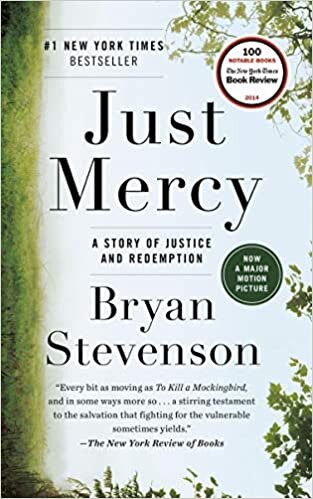
I can’t recommend this book loudly enough. Don’t be fooled into thinking if you’ve seen the movie, there’s no need to read the book. First of all, is that ever true? I would submit no but in the case of this book, it’s a resounding no. The movie only scratches the surface of Bryan Stevenson’s amazing work. He’s the real-life Atticus. No joke. Here’s a snippet from my earlier review: A good non-fiction is hard to find. Even harder? One that permeates our sheltered lives and upends our worldview. If there was a required reading list for life, Just Mercy would be on it. Stevenson shines an unadulterated light on the destructive effects of mass incarceration, a broken judicial system, and the devastating consequences when we reduce the worth of a human soul to "the worst thing [they've] ever done." This book feels like a clarion call—one that pleads, as Maya Angelou once said, "when you know better, do better."
You can read the rest of my review here.
Slavery and the Destruction of the Black American Family
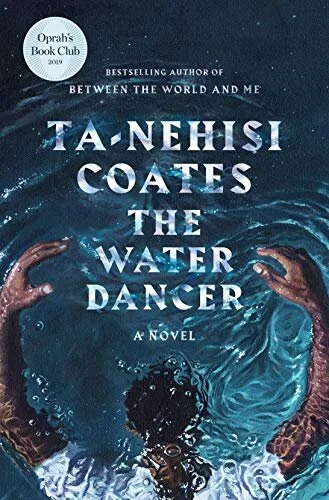
Perhaps one of the most far-reaching tragedies of slavery is the calculated decimation of the black American family by slave owners. Those consequences run deep and last for generations. This is clearly something that haunts Coates as evidenced by his original work: Between the World and Me. A heart-wrenchingly beautiful tale of an illegitimate son of a slave owner who is forced to watch his mother, the man who loved her, and all his siblings sold off one by one to places unknown. Never to be seen or heard of again. Let that sink in. No family history. No stories passed down through the generations other than one of deep longing and sorrow for what might have been.
“I felt a great rage, not simply because I knew they had been taken but because I knew how they had been taken, how they had been parted from each other, how I was born and made by this great parting. Better than before, I understood the whole dimensions of this crime, the entirety of the theft, the small moments, the tenderness, the quarrels and corrections, all stolen, so that men such as my father might live as gods.”