Candle in the Wind

“Reading is the key that opens doors to many good things in life. Reading shaped my dreams, and more reading helped me make my dreams come true.” —Ruth Bader Ginsberg

“Life is a brief candle, but love is a craving for time.”


Rest in peace Ruth. Thank you for being your own person—for being a leader and a true visionary. We need strong women with strong values more now than ever before. Of course, I’m particularly fond of any rockstar dynamo who will acknowledge the power of reading to help open doors and lasso dreams. I wonder if the notorious, glorious RGB picked up a copy of The Confessions of Frannie Langton in the past year? 
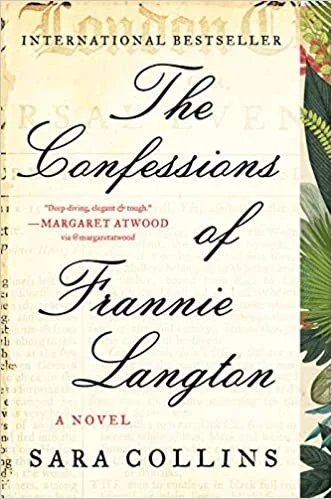
Something tells me the Supreme Court Justice would thoroughly appreciate Frannie Langton, a Jamaican slave who “travel[ed] across the Atlantic and through the darkest channels of history.” Literacy bought her thoroughfare. (She was part of a “little colonial experiment” by a depraved scientist in Jamaica, which afforded her an education, despite being enslaved.) Swapped from an “iron cage for a gilded one,” Frannie was gifted to George Benham, a scientist who was purported to be the finest mind in England. Benham’s French wife, Marguerite, forms an unlikely “special” relationship with Frannie. She shattered the Jamaican girl’s belief that every white you’ll ever meet “either wants to tame you or rescue you.” So how do both of the Benhams wind up being murdered at the hands of this mulatta slave? Is she responsible for their untimely deaths?  You’re gonna have to read to find out. It’s true: “The Confessions of Frannie Langton is large, lavish and gutsy, a skilled and intoxicating mash-up of slave narrative, gothic romance, whodunit and legal thriller.” 

P.S. I did some supplemental reading about Sarah Collin’s debut novel. This was pretty insightful: “Frannie is an extreme version of Jane Eyre. She is a powerless child brought up horribly in a horrible place, and her voice thunders in exactly the same way. She often says things that are true, but jarring, such as: “A man writes to separate himself from the common history; a woman writes to try to join it.” Her pronouncements are just like those of Jane, who isn’t afraid to tell Rochester that she loves Thornfield in part at least because she has not “been buried under inferior minds.” Like Jane again, Frannie is awkward and pretentious in her cleverness because she has never been allowed to exercise it properly. Rochester calls Jane a caged bird, but Frannie is a battery hen.” If you love Jane, you’re gonna like Frannie.
Posted by Tracy

The Bees Knees

“Mother Nature knit a careful plan in place, and if you pulled one thread of it loose, the whole thing could unravel. These insects that made most people run in fear were the invisible glue of the earth that held us all together.”

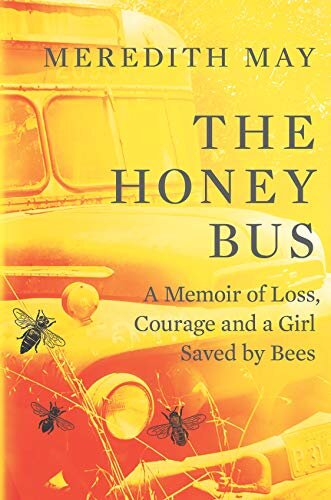
Did someone say sizzling pace or was it fizzling pace? I’ll let you guys decide. I’m a wee bit upset with myself for waiting so long to write about one of my favorite reads of a somewhat miserable 2020. (Not to worry—the glass is still half full, I promise.) Maybe it was subconscious? After all, I had to distribute The Honey Bus by Meredith May to the masses before I let the cat out of the book bag. It’s hard to beat a never-before-heard-of memoir in the mailbox that wraps you up, pulls you in, and penetrates your unsuspecting heart. Don’t believe me? Give me your address.

If you liked The Glass Castle and Educated, you’ll love The Honey Bus. This novel reminded me that we can mend our broken parts if we’re astute enough to see the world through new eyes when life destroys the lens we’ve formerly looked through. May’s childhood lens shatters when her parents get divorced. When her mother hits the proverbial (and dysfunctional) rock bottom, May’s kindhearted grandfather introduces her to the productive world of bees who teach her important lessons about family. Survival too. Already, I want to read it again. I’m 100% with the reviewer who observed that this memoir is “filled with grace, beauty and wisdom, [it’s] like warm honey in the sunshine.” You’ll definitely want to bask in this one.

Posted by Tracy

Good, Better, Best

How are the longer, lighter days of summer winding down already? We’re not remotely ready to slow the reading flow just yet. Maybe Corona will help us keep our sizzling pace? (Come on, two posts a week constitutes some sizzle, doesn’t it?) Here’s a good, better, best post for those of you who are trying to read by the fading natural light.

Good

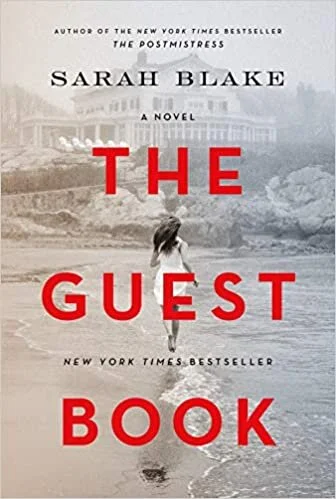
Coming from a family of pleasers, The Guest Book reminds me that sometimes saying “no” is not necessarily the best answer. The rich and powerful Milton family, hailing from New York, has secrets that neither propriety nor time can dismantle. When decades of family deceit surface on their island in Maine, descendants begin to question their lily-white legacy. This read offers up intrigue, some good ole fashioned elitism with a splash of racism. It underscores the idea that things aren’t always as they appear. So find yourself an island and pick up this 4-star beach read.

Better

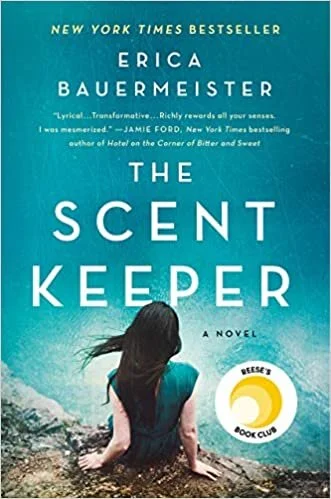
Speaking of island reads, The Scent Keeper gave me all the beach feels. If forced to choose between the two, I’d definitely pick Bauermeister’s coming-of-age novel. I’m 100% with Macmillan Publishers about this Reese Book Club pick: “Lyrical and immersive. The Scent Keeper explores the provocative beauty of scent, the way it can reveal hidden truths, lead us to the person we seek, and even help us find our way back home.” You’re bound to love Emmaline’s fragrant search for her place in the world.

Best

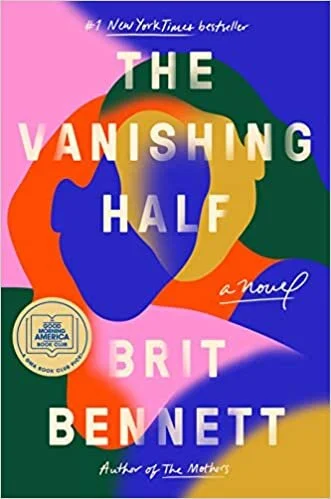
The Vanishing Half earned the highest honors because this recent release has it all: plot twists, family dynamics, passing, racial identities, and (like Rachel) identical twins. One twin sister is trapped in an abusive marriage, only to run back to her rural Louisiana hometown. The other sister tries to escape racism by passing and marrying a prominent white man. Non-parallel paths reveal the stark difference between a black and white world. I’m not the only one singing Bennett’s praises—Kiley Reid, author of Such A Fun Age, had this to say: “Bennett’s tone and style recalls James Baldwin and Jaqueline Woodson, but it’s especially reminiscent of Toni Morrison’s 1970 debut novel, The Bluest Eye.”

Guest Post by Sharee

Victorian Lives Matter

“Whatever our souls are made of, his and mine are the same.”

Eliane,

I’m sorry you’re sad, my friend. There’s no question Hindley had it rough and, like Michael Jackson, was gone too soon. If we want to dwell in bleakness momentarily, Hindley got quite a few more years than Linton, who died at the unripe age of 17. Catherine and Frances gave up the ghost at 18. (Well Frances did anyway.) By these standards, Isabella, captured longevity; she lived until she was 31. This is a classic case of literature mirroring real life. Tragically, Emily Bronte died at age 30, Anne at 29, and Charlotte didn’t make it to her 39th birthday—tuberculosis robbed each of them of so many years. (Imagine the classics that were buried alongside those sisters. Big Heavy Sigh.)

Why do I feel compelled to ask if it’s important to read sad stories? What do we learn from the sobering stuff? Awareness is the first answer that comes to mind. (Victorian Lives Matter.) I’m especially passionate about gender ideology, I know you are too—we need to understand unjust cultural requirements and unfair expectations for women. We need to learn from the past in order to move forward and stay forward. In the light. Empathy is another important answer to the question why should we read sobering stories? Walk a mile in another girl’s shoes, right? I felt for young Catherine. What a horrible web she got caught in. And I wanted to cry out a warning sound to insecure Isabella.

But as usual, I’ve meandered from the pressing question that spans our letters: Why is Heathcliff considered heroic when he’s deplorable??? The only way to shed good light on this literary conundrum requires a close look at what constitutes a Byronic hero. You’ll remember Lord Byron. His fictional (potentially autobiographical) character Childe Harold was the first to represent an extreme variation of the Romantic hero archetype. Like the Romantic hero, the Byronic hero is a complex person who often kicks against societal pricks. Norms are not for them. Of course, it won’t surprise you that this type of character is psychologically damaged—a tortured soul essentially. And even when an anti-hero behaves benevolently, those acts are tainted by his brooding, dark nature. Here’s the kicker: this type of Byronic guy is typically charismatic, good looking, and a passionate/sensual man—this draws star-crossed females to him. Say what??? Come again, Byron. Why would a woman be attracted to an arrogant, cunning, surly man who swings between extreme states of emotion?

For the same reason we like Hamlet, Mr. Rochester, Jay Gatsby, Dorian Gray, and arguably, Mr. Darcy. They may be fighters, but let’s be honest—their passion makes them serious lovers as well. (It’s not necessarily a juxtaposition.) Let me just put it down in print, once and for all. Heathcliff is a somewhat redeeming character because of his ardent and undying love for Catherine. His heart is moored to hers. It is something to behold, even if it is sometimes crazy.

You can read plenty online about romantic love in Wuthering Heights. I’m running out of blog space, so I will wrap-up with this fact: the love relationship between Heathcliff and Catherine has become an archetype. Their Devotion? Admiration? Obsession?  was obviously significant. Readers must (if only subconsciously) be drawn to the notion of a passionate longing to be whole—to give oneself unreservedly to another—to gain a oneness or whole self or sense of identity back. No wonder Catherine exclaims, “I am Heathcliff!” Do you, Eliane Pohl, think they redefine love for the reader? Their intense emotional passion transcends mortality to forge something that feels seriously supernatural. I love big sis Charlotte’s observation of WH: “In its storm-heated and electrical atmosphere, we seem at times to breathe lightening.” And whether we want to admit it or not, that lightening is supplied by none other than Heathcliff and Catherine. Here’s my advice: focus on the lightening more than the storm.

I hate to end this post. It makes me sad. I’ve extracted so much more from Bronte’s cult classic via virtual book club than I would have in a plastic 29-inch tablet arm desk among small high school walls. Please say we can do this again. Soon. Please, I beg you. Let me leave you with one final question to ponder: Are Soulmates Real?

I happily (and anxiously) await your response!

Tracky 

p.s. For more on the features of a Byronic Hero, here’s an interesting read.

No Respecter of Persons

“Nothing’s more powerful than the morphine molecule, and once it has its hooks in you, nothing matters more. Not love. Not family. Not sex. Not shelter.” – Dopesick

Alright, my friends. It’s time to get real here—literally. Here’s a non-fiction must-read coming your way. Before diving in, I do want to sound the warning horn for those who may have sensitivities towards illicit drugs and/or drug abuse.

It’s estimated that 128 people die every day from an opioid overdose (thanks, CDC), which amounts to over 67,000 people needlessly dying each year. Opioid addictions are no respecter of persons. That’s what makes them so deadly – take the drug one time and you can be hooked for life.

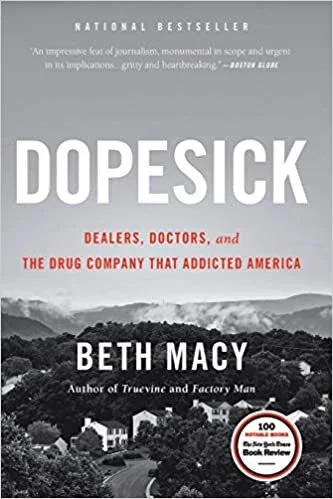
Beth Macy’s stunning book, Dopesick: Dealers, Doctors and the Drug Company That Addicted America exposes the shocking truth behind opioids and how the American epidemic unfolded in the late 1990s and early 2000s. As an author and former investigative journalist, her work in the Appalachian areas of West Virginia and Virginia reveals appalling facts and stories, beginning with the creation and rise of opioids at the hands of Purdue Pharma (insert the collective boos the TV networks plug into sports games during COVID). Macy’s book encompasses accounts from hundreds of addicts, family members, doctors, rehabilitation specialists and more as she unravels the details behind this modern-day plague and how victims and their families have struggled for years to overcome the damages caused by the company’s ignorance and greed. 

For me, the brilliance of this book comes from the humanizing of an otherwise abstract concept. Macy’s work with the surviving family members is truly heart-wrenching as they recount their experience with the attempts and failures that come along the road to recovery. In addition to the emotional appeal of the story, many share their experience not only with the past, but their futures—some not only lost family members to death and drug cults, but incurred massive debts from legal costs, medical bills and failed rehab treatments. I give the book a solid 4.5 out of 5 stars.

I’m sure many of you know of or have heard the stories about someone being addicted to heroin or opioids, some being closer to home than others. I have a cousin who has been in and out of jail for the past 15 years, struggling to stay away from heroin. As someone who has never been interested in drugs—I chalk it up to good parenting and a high school soccer coach who threatened to kick us off the team if we were caught within a “sniff” of drugs—it’s hard for me to fathom how people can get so lured into opioids and illicit drugs. However, Macy’s book was the first time I was able to comprehend a smidgen of what these addicts go through and how hard it truly is to stay away from opioids. As one coal miner from Grundy, Virginia told his doctor, “It became my God.”

Bonus: For those who are devout to the docs, Macy has a long-form story on Audible about one of the addicts and her family’s journey to find her and bring her home called Dopesick: Finding Tess. If you’re left craving more (like me), this may be a good place to start.

Guest Post by Michelle