Hope and Heartbreak

“How unrecognizable America had made them, she was thinking, all of them.”
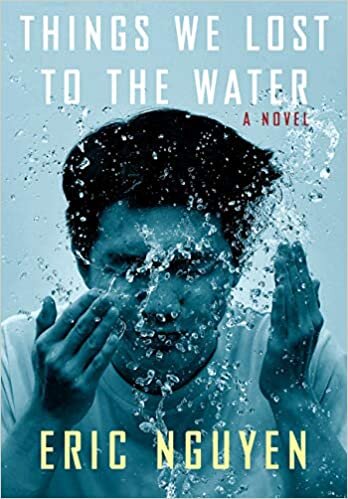
I don’t know the Vietnam War. Nothing more than what I was taught in school, and admittedly, that’s not much. What’s more, my understanding of refugees’ struggles and tumultuous life changes when fleeing their war-torn countries is fairly abysmal. Eric Nguyen’s debut novel, Things We Lost to the Water, has helped me understand the sobering process more.

Beginning in the 1970’s, Nguyen unravels a tale of Huong and her two boys—Tuan (age five) and Binh (a newborn baby)—who escape war-ravaged Vietnam for a calm and lazy New Orleans. Separated from her husband, Cong, during their escape, Huong sets up life in The Big Easy, hoping that Cong joins them soon. Huong soon realizes that he will not be joining them in America. Time teaches her that she and the boys need to move forward with their lives.

Throughout the story, we follow the three characters as they set up a new life in the United States. Huong develops her skills in various jobs and works her way from having nothing to buying her first (used) car as an American citizen. We see how immigration affects Tuan and his sense of identity and how he struggles to fit in his new home in America while holding on to his past. Finally, Binh (later renaming himself Ben) struggles to find any hold in his Vietnamese culture and attempts to forge his own path independent of his family. Set over the course of almost 30 years, Nguyen weaves together a story of hope and heartbreak that may be similar to real life refugees’ experience today.

This book is a solid 4 out of 5 stars for me. While the writing is a bit jerky and can be difficult to follow, I believe it may be on purpose—to mirror just how refugees feel in their new homes: life is a bit jumpy and change is hard to process. A stunning first novel, I thank Nguyen for sharing important insights into Vietnam that I left me with greater awareness and increased compassion. And we can all use more compassion right about now.
Posted by Michelle

Women of Cuba, We Hear Your Cries

“Who are we, weakness? No, we are force.” – Victor Hugo, as quoted in Of Women and Salt

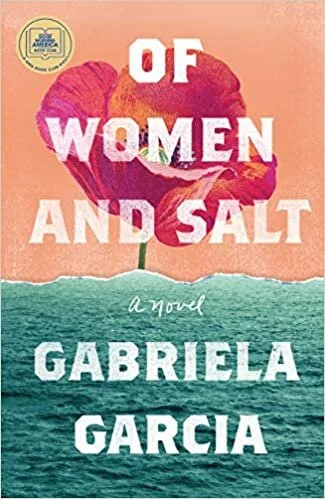
Our most recent read is a book that received big time attention online. (We’re talking Vogue-big.) So big that The Los Angeles Times claims “Of Women and Salt” is “everything that American Dirt wasn’t.” If that doesn’t catch your attention, we don’t know what will. While our interest may have been piqued from the flashy online reviews, Gabriela Garcia now has our full and undivided attention.

Of Women and Salt follows two families in their quest for and struggles with immigration. We first meet Maria Isabel in Cuba in the 1800’s, where she prides herself on being the only female cigar roller in town. After falling in love with a rare literate male, she becomes enchanted by the words of Victor Hugo and his ideas of revolution. Maria Isabel’s commitment to overthrow the oppressive Cuban government and better her life sets off a chain of events through other women in her family that lead us to present-day Miami, where Carmen is struggling to help her daughter, Jeanette, stay clean and sober. Across the street from Jeanette’s house live Gloria and her daughter, Ana, illegal immigrants from El Salvador.  Jeanette watches one morning as Gloria is arrested by police for being an illegal immigrant. Ana comes home later that night to find her mother gone. Jeanette, recognizing what Gloria has done to protect her daughter, invites her to stay the night at her house.

What follows is a story of heartache, loss, and survival as we witness both family’s desperate search for a better life in the United States. Focusing solely on the stories of women, Garcia has crafted a narrative that will both break your heart and lift your spirits at the same time. (Did we mention she wrote part of this while developing her thesis in grad school, and that it’s loosely based on her family’s immigration story? You go, girl!). The feminist in us was proud to turn pages and rub shoulders with these remarkable women. 

P.S. Michelle read this book in a day – she was hooked! Sharee listened to the book and said it was a good listen, but a little hard to follow the dates and times—so pay close attention to the beginning of the chapters. Definitely 4.5 out of 5 bright stars for this debut novel.

Posted by Michelle and Sharee

Ode to the Very Lovely Mr. Carle

In the light of the moon a little tear lay on the edge of my cheek. I’m sad that we lost arguably the greatest “picture writer” of all time today. How I love Eric Carle, The Hungry Caterpillar’s inspiration, who claimed that his brain and soul were at their collective peak when he was just six years old. What a precocious child! He’s colored our world and made it so much more vibrant and joyful. Thank you, Mr. Carle. All the starry, starry thank yous go to you today.

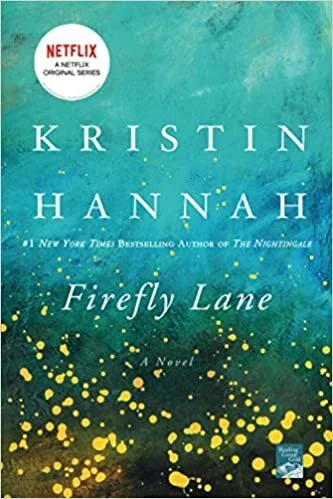
In honor of the late great one, let’s talk fireflies, as in Firefly Lane. It’s no secret we’re huge Kristen Hannah fans around here. The Nightingale grabbed our female hearts and opened our sympathetic minds—a story that changed us to be sure. Firefly Lane does surround important topics like the complexity and importance of an enduring friendship, the ability to hurt and to heal, and the cumulative effect of our choices on relationships. But it’s not a novel gamechanger. I appreciated Kate and Tully, girlfriends who are opposites in myriad ways, who also need each other in significant ways. True to life, their friendship displays a breadth and depth of emotions, and reminds me that loneliness can be the link that ultimately binds people together. This wasn’t a supernova. But it is a good read for a sunny day when the beach is calling. Promise us, you’ll go Under The Sea while you’re at it, and think fondly of Mr. Carle.  

P.S. Firefly Lane is a Netflix mini-series—it was just renewed for Season 2.

Posted by Tracy and Sharee

The World is a Rose

“What’s lateral thinking?

 Thinking about things from different angles. Sideways, upside down, inside out…if I was to ask what direction a clock’s hands go, what would you say?

 Clockwise?

 Not if you’re inside the clock.”

By way of introduction, Sharee is a big puzzle gal. She’ll sprawl a 500-piecer on the dining room table and have it finished over a weekend. Crossword puzzles are more of Michelle’s speed. Give her the small little boxes and a couple of clues, and she’ll be set for a few minutes (thank you, NYT, for your daily mini-crosswords)!

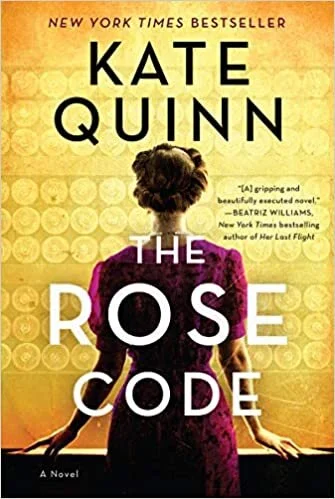
Whether you puzzle over pieces or not, you’ll love Kate Quinn’s latest novel, The Rose Code. The story follows three girls that couldn’t be more different: Mayfair debutant Osla Kendall, Shoreditch sass Mab Churt and Brainiac Beth Finch. Brought together by cracking German and Italian codes at Bletchey Park during the war, the girls become fast friends with one stipulation: no one is allowed to share what they do for work or what they uncover.

Fast forward to 1947, and the girls are mortal enemies—one writing gossip for London’s The Tattler, one a housewife in York and one in a sanitorium. A cry for help and untold secrets from the war will either bring the girls back together or drive them further apart—can the girls crack this code? Suspense, secrets, and sass keep this WWII novel moving pretty quickly. Sharee says this book is a 4.75 out of 5 stars – practically perfect in every way!

P.S. For the Kate Middleton fans out there (aka everyone), did you know that her grandma, Valerie Middleton, was a codebreaker at Bletchley? Her story inspired Princess Kate to revitalize the headquarters for visitors in 2014. You bet Grandma Middleton gets a nod in Quinn’s book!

Posted by Sharee and Michelle

Go Deep or Go Home

“I know [the word masterpiece is] something of an old-fashioned conceit, nevertheless, I'll go for broke and call Klara and the Sun a masterpiece that will make you think about life, mortality, the saving grace of love: in short, the all of it.” —Maureen Corrigan

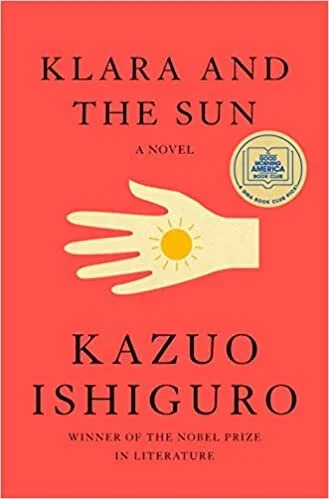
That’s high praise from NPR’s Maureen Corrigan—she’s successfully lassoed the big daddy of deep thoughts a careful reader is bound to ponder if they pick up a copy of Klara and the Sun. Combine “masterpiece” with the fact that Rachel recommended this book to me, and well…need I go on? Seriously, I could stop here.

(Cue John Mayer) One more thing, why don’t I know more about Klara’s brainchild, Kazuo Ishiguro? I mean, come on, the man has won the Nobel Prize in Literature. I’ve been sleeping on the job. I absolutely positively need to read The Remains of the Day. (Eliane, I feel the book club selection after Emma comin’ on—oh and Emma will be comin’ on, I promise.)  I’m intrigued by the man whose got me thinkin’ Coo Coo Ka Zuo. When he won the big award, Ishiguro was described as “a writer who, in novels of great emotional force, [uncovers] the abyss beneath our illusory sense of connection with the world.” Go deep or go home, right?

There are deep layers in this speculative fiction. Klara is such an observant first-person narrator, even if (or because?) she’s an AF—an artificial friend. AF’s aren’t IRobot-inspired, meant to clean house; they aren’t pandemic-inspired tutors; and they’re not replacements for uninspired parents. An AF is designed to be a loyal companion. When 14-year-old Josie, sick with a life-threatening illness, chooses Klara for her AF, she couldn’t have possibly appreciated how a humanoid would impact her teenage life. With the backdrop of a futuristic world where loneliness is underscored, the importance of a true friend is amplified. Maybe we all underestimate, to some degree, the impact of a devoted friend—the kind that love freely and wholly, without conditions. All this to say,  I’m grateful for a profound novel that ultimately explores the question we all should: what does it mean to love?

Posted by Tracy

Not Vile, Just Splendid

“It was magnificent and terrible: the spasmodic drone of enemy aircraft overhead; the thunder of gunfire, sometimes close, sometimes in the distance; the illumination, like that of electric trains in peace-time, as the guns fired; and the myriad stars, real and artificial, in the firmament. Never was there such a contrast of natural splendor and human vileness.” —John Colville via Erik Larson, The Splendid and The Vile

 “I never gave them [Britons] courage. I was only able to focus theirs.” — Sir Winston Churchill, 1941

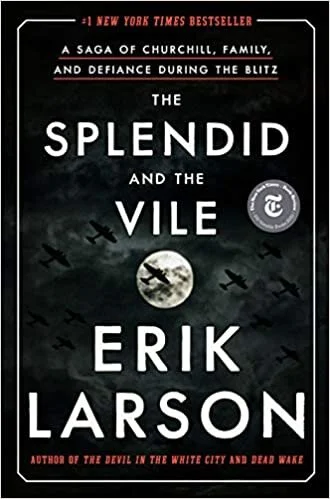
For a hot lil’ second, I was an English major and a History minor. Like Tracy and Rachel, I was a resident of 27 Palace Court for a semester abroad and became captivated by the city and its history. The major and minor didn’t stick, but the fascination with all things London did. When I heard that Erik Larson was writing a book about Churchill’s experiences with the Blitz, I almost started salivating.

The Splendid and the Vile takes a complete 365-day view of Churchill’s first year in office. From May 10, 1940 when he was sworn in as Prime Minister through May 10, 1941, Larson dives into Churchill’s cabinet and how they weathered German’s year-long aerial blitzkrieg. Through years of research in London and Washington DC, Larson cites from multiple personal journals from prominent players in the War, such as John Colville (one of Churchill’s private secretaries), Mary Churchill and even Joseph Goebbels, one of Hitler’s evil henchmen. I loved that this wasn’t just a history lesson—Larson weaves together their stories with the facts, keeping us interested in the characters and their storylines on top of the history lesson. A perfect marriage of English and History. (Seriously, can Larson just write textbooks? I think we’d all have learned a lot more in school!).

Even better, the book is dedicated to the first year of Churchill’s leadership to give us a comprehensive look into the German blitzkrieg and how desperately Hitler wanted Churchill to call for a peace treaty. As I started the book, I was a little bummed that we wouldn’t be reviewing all of his devout years in office. By the end, I was satisfied that it was only a year. There are A LOT of WWII books out there and I feel as though this was one area that I hadn’t learned about. Thanks to Larson, I now feel that I understand it better.

The hype is real–Larson truly delivered a hit! If I could give half a star, I would give it 4.5 out of 5. I learned a lot from reading The Splendid and the Vile. For those that aren’t as devout to a physical book as I am, it would be a great listen. A little long, but worth the time.

P.S. If you read my last post, this book made Barack’s list. Seems like reason enough to read Larson’s latest, no?

Posted by Michelle

If It Was Easy, Everyone Would Live Here

“I do not need a statue or a flag to know that I am Southern. I can taste it in the food, feel it in my heart, and hear it in the language of my kin.”

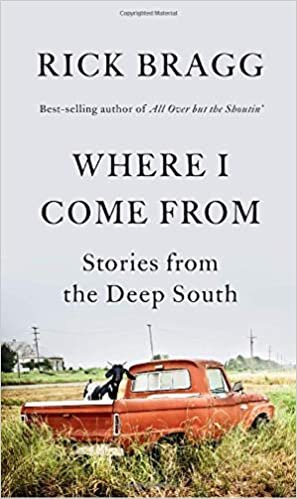
Is it me or is Rick Bragg above cancel culture? As a “Yankee” who finds herself currently living in the deep South, picking up Bragg’s latest was a no brainer. (I’m still whoopin’ about All Over But the Shoutin’, 24 years after the fact.) The prize-winning journalist resonates with me for several reasons—first, you’ve gotta admire a man who comes from Possom Trot only to arrive at the Pulitzer; second, he has a strong penchant for putting a human face on a story; and third, he shares with a raw honesty that ultimately makes him a very endearing writer. Please say those reasons seem as stellar to you as they do to me. If so, grab yourself a moon pie, pull up a seat, and crack the spine on Where I Come From: Stories From the Deep South.

Maybe it’s time to let Bragg do the honors—here’s how he described his newest ode: “The stories in this collection are of the South’s gentler, easier nature. It is a litany of great talkers, blue-green waters, deep casseroles, kitchen-sink permanents, lying fishermen, haunted mansions, and dogs that never die, things that make this place more than a dotted line on a map or a long-ago failed rebellion, even if only in some cold-weather dream.” What a tease, that man. He makes Southern living look good, or does he? You’ll have to read to find out, but one thing’s for sure: you’ll laugh along the way!

p.s. This book is worth buying if only to have “My Affair with Tupperware” handy. Or if you’ve had a run-in with fire ants, you’ll definitely want to read “The Grumpy Gardener.” Tee-hee.

Posted by Sharee

In Barack I Trust

“Memories are always bent retrospectively to fit individual narratives.”

Towards the end of last year, Barack Obama shared an Instagram list detailing his best reads of 2020. Near the top of his list was Emily St. John Mandel’s The Glass Hotel—what more did I need to convince me to pick it up? Boy, did it deliver! Mandel’s storytelling is a work of art. The book starts at the end and ends at the end. Confusing? Yes. Intriguing? Most definitely. 

Main character Vincent grows up quickly, before our eyes, after she experiences a large childhood tragedy. While bartending at a five-star hotel on a remote island in Canada in her early 20s, she meets Jonathan Alkaitis, investor extraordinaire and owner of the hotel. We follow her story over the years as her life changes from that of a poor girl to a rich woman, along with the reckoning that comes with the ultimate reveal of Alkaitis’s actual profession – running one of the largest Ponzi scheme in history. Not a spoiler, I promise!

Mandel’s ability to toggle between grief and guilt and delusional reasoning keep you hooked from the beginning (or should I say the end?) – a solid 4 out of 5 stars in my opinion.

BONUS: For those interested in some pre-pandemic life predictions, Mandel’s first big hit was back in 2014 titled Station Eleven. It’s EERIE how close she called some aspects of pandemic living!

Posted by Michelle